
Soft Autumn vs Soft Summer: How to Tell If Soft Autumn Is Better
If you’ve been researching seasonal colour analysis, chances are you’ve found yourself torn between two of the most commonly confused seasons: Soft Autumn and Soft Summer.
Both seasons are muted, sophisticated and low-contrast — but the undertone behind them is completely different.
Understanding whether you’re a Soft Autumn or a Soft Summer can transform your wardrobe, makeup choices, hair colour decisions (no more bad hair days!), jewellery, and even how healthy and vibrant your skin appears.
In this guide, I’ll break down the key differences between Soft Autumn and Soft Summer, the defining traits of a true Soft Autumn, and how to know which palette is most harmonious on you.
If you’re still unsure after reading, you can also book a professional Virtual Colour Analysis with me or explore the Soft Autumn Colour Guide for a complete digital palette, makeup and styling resource.
What Is a Soft Autumn?
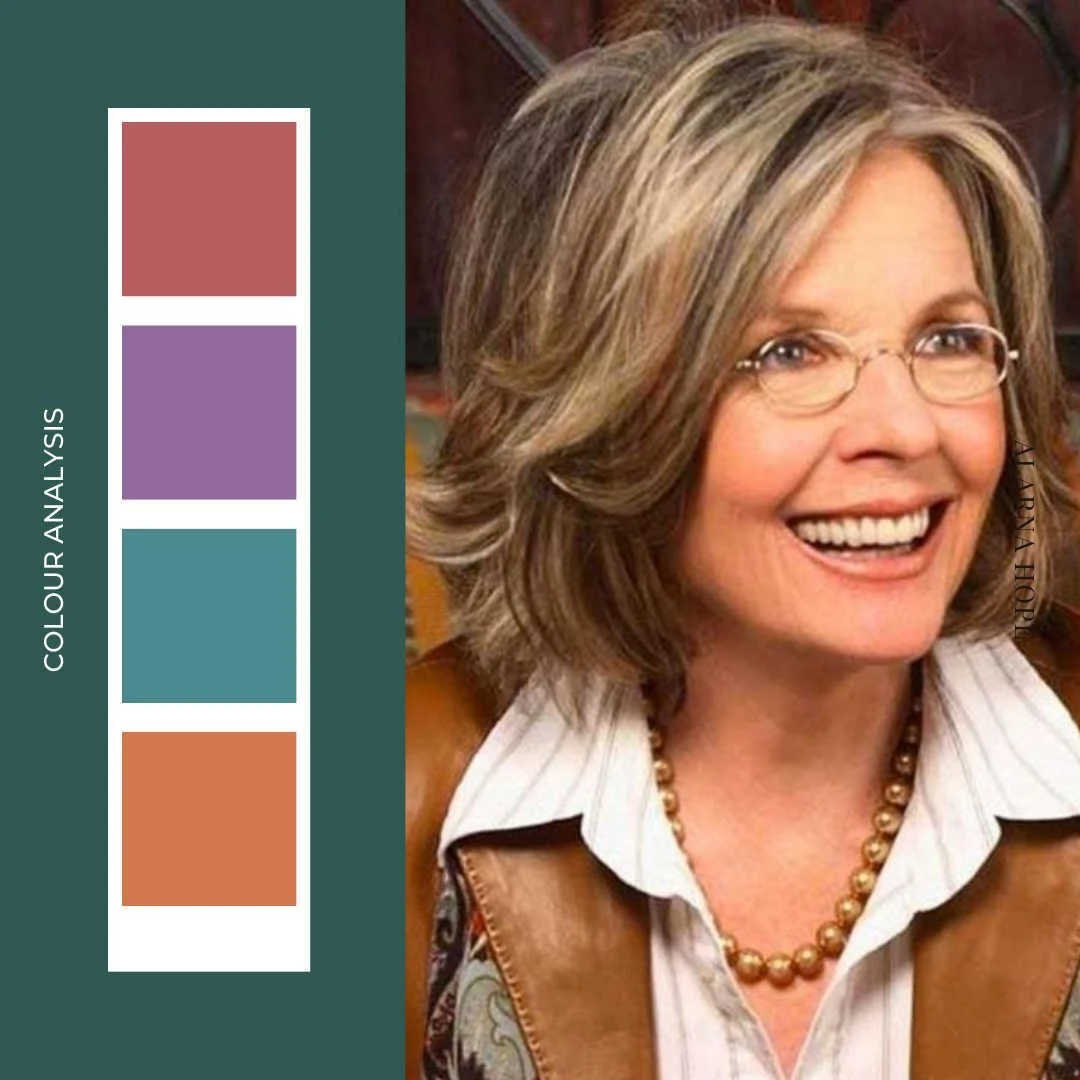
Soft Autumn is a warm, muted and earthy season within the 12-season colour analysis system.
Soft Autumns sit between:
True Autumn (warm and rich),
Soft Summer (cool and muted).
This means Soft Autumns still have warmth, but their colouring is softer and more blended than deeper Autumn types. Their overall appearance tends to feel gentle, muted, earthy, sophisticated, natural rather than high-contrast.
Soft Autumn colouring is often described as:
smoky, mossy, dusty, warm-neutral, softly blended.
Typical Soft Autumn Features
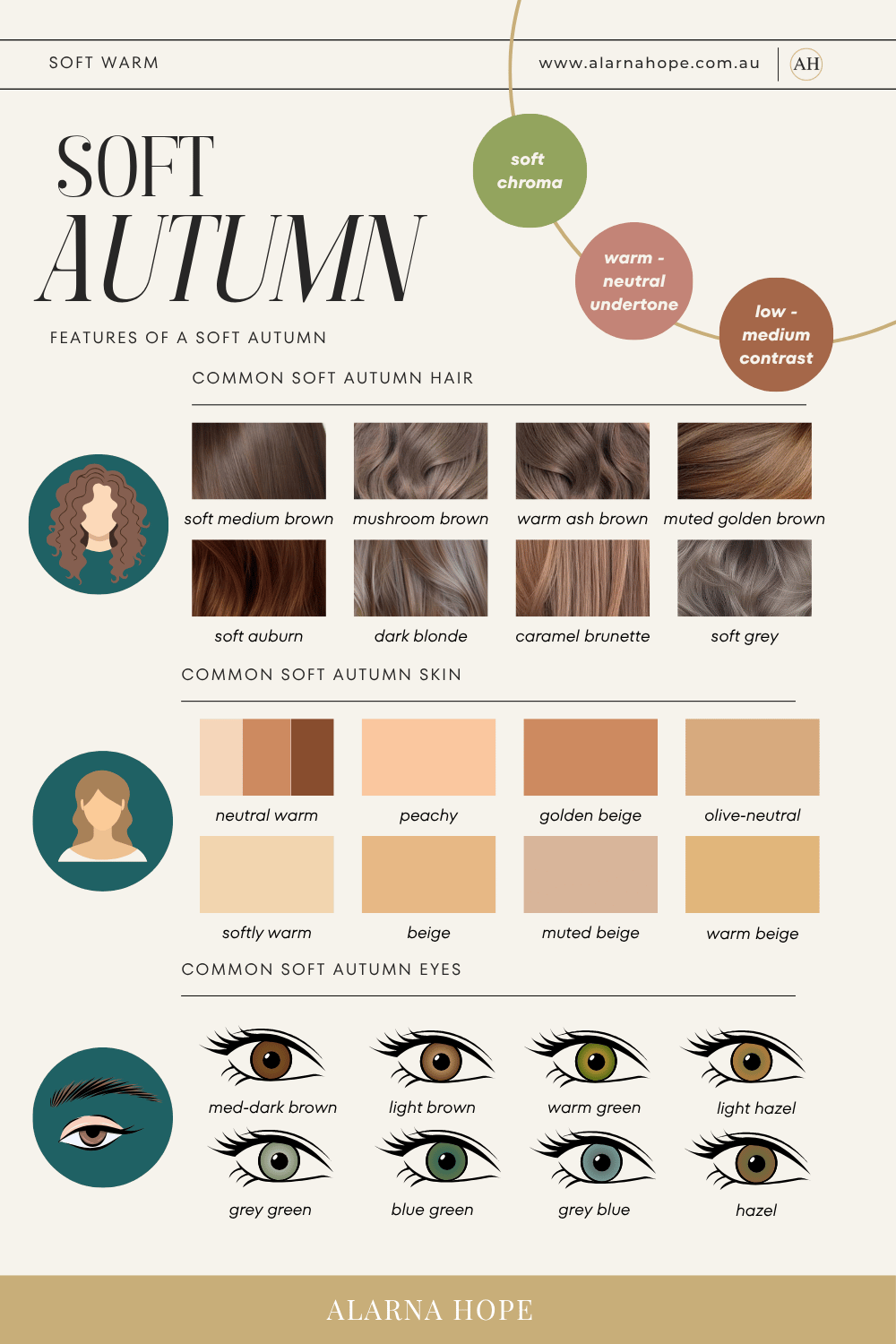
While colour analysis is about how colours react against your skin rather than fitting rigid stereotypes, many Soft Autumns share similar characteristics.
-
Soft Autumn hair is usually muted rather than vivid.
Common Soft Autumn hair colours include:
soft medium brown,
mushroom brown,
warm ash brown,
muted golden brown,
soft auburn,
dark blonde,
caramel brunette.
The key is softness — not high saturation.
-
Soft Autumn skin often appears:
neutral-warm,
peachy,
golden-beige,
olive-neutral,
softly warm rather than obviously yellow.
They may tan easily and often suit cream better than stark white.
-
Soft Autumn eyes often look:
hazel,
soft green,
muted blue-green,
warm grey,
olive,
soft brown,
tea-coloured.
The eyes usually appear blended and gentle rather than bright or icy.

Discover Your Most Flattering Colours as a Soft Autumn
Learn exactly which colours, makeup shades, metals and outfit combinations make your features glow — with a professionally designed Soft Autumn digital palette guide.
This guide contains:
50+ Pages of advice about wearing Soft & Warm Colours
60+ Colours that suit a Soft & Warm or Soft Autumn Colour Palette
Colour Schemes & Combinations to build your wardrobe off.
Celebrity Examples of people with your colouring
Eyeshadow and Lipstick colour names and brand recommendations
Outfit Inspiration for your colour type
Soft Autumn's worst colours
Hair inspiration for Soft Autumns
Best alternatives to black for Soft Autumns
What Makes Soft Autumn Different From Soft Summer?
This is where most people get stuck when testing thier own colours.
Both seasons are muted, low contrast, elegant, soft rather than bright, but the undertone changes everything.
The Core Difference:
Soft Autumn = Warm + Muted
Soft Summer = Cool + Muted
That single shift dramatically changes which colours harmonise best.
What Is a Soft Summer?
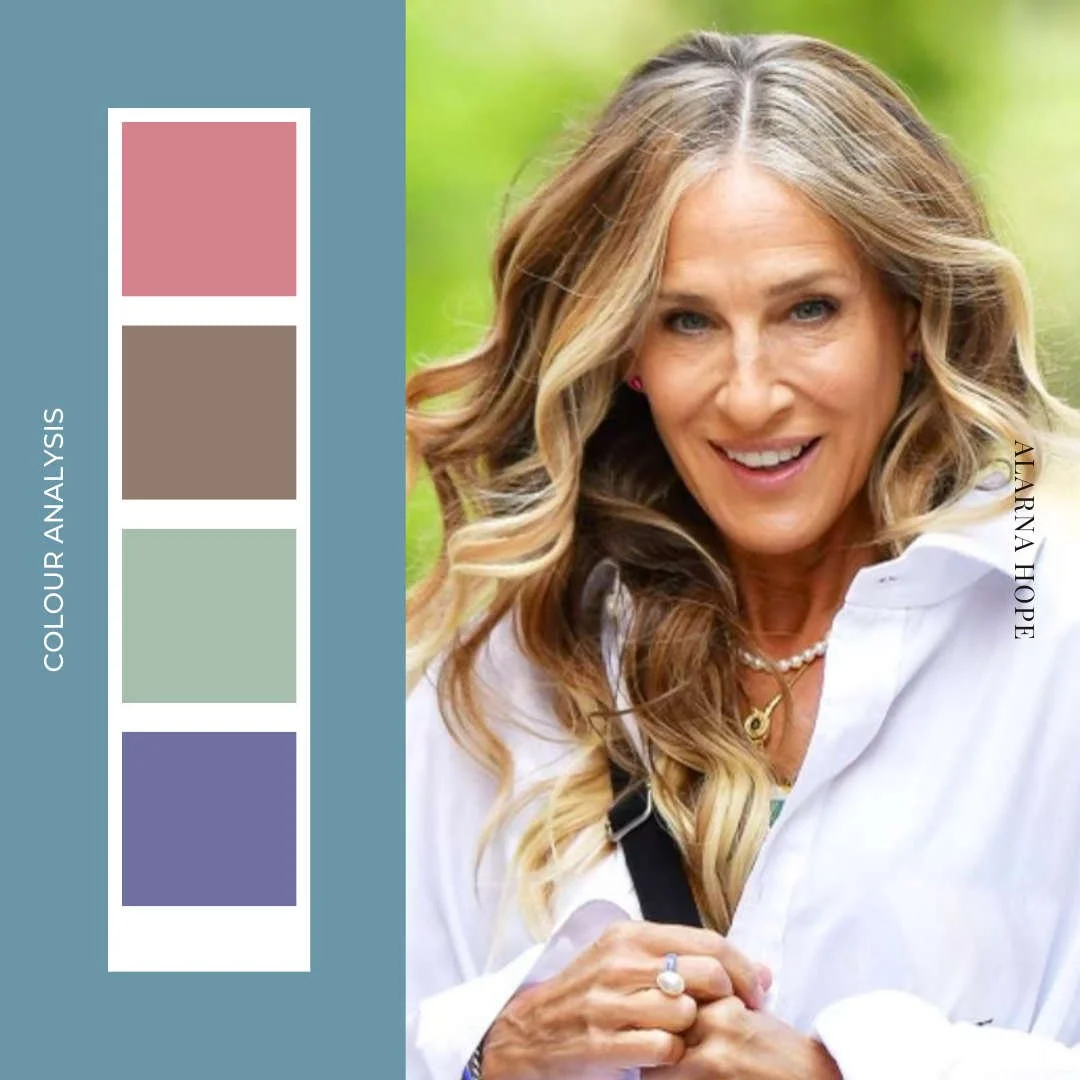
Soft Summer is a cool, muted and softly blended season within the 12-season colour analysis system.
It sits between:
True Summer (cool and refined),
Soft Autumn (muted and earthy).
Soft Summers have:
cool-to-neutral undertones,
low contrast features,
and colouring that appears soft rather than vivid or intense.
Their overall appearance tends to feel delicate, elegant, smoky, powdery, cool and understated.
Soft Summer colouring is more muted than bright, icy or highly saturated palettes.
Signs You Might Be a Soft Autumn Instead of a Soft Summer
-
Soft Autumns usually glow in:
cream,
oatmeal,
ivory,
warm beige.
Soft Summers tend to look better in:
soft white,
dove grey,
cool taupe,
dusty rose.
If stark white washes you out but cream makes your skin look healthier, this strongly points toward Soft Autumn.
-
Soft Autumns thrive in:
olive,
sage,
moss,
camel,
terracotta,
muted teal,
cinnamon,
eucalyptus green.
Soft Summers tend to suit:
mauve,
dusty blue,
cool lavender,
smoky rose,
slate blue,
soft berry tones.
If cool pinks make you look tired or grey, you may not be a Soft Summer.
-
Soft Autumns generally suit:
brushed gold,
bronze,
antique gold,
warm mixed metals.
Soft Summers often look more balanced in:
silver,
pewter,
white gold,
cooler metallics.
Many Soft Autumns can still wear silver — but it usually isn’t their BEST metal.
-
One of the clearest signs of a Soft Autumn is struggling with black.
True black can:
overpower the face,
emphasise shadows,
create tiredness,
drain warmth from the skin.
Soft Autumns usually look better in:
espresso,
chocolate,
olive-brown,
charcoal brown,
warm navy.
Soft Summers may also struggle with black, but often tolerate cool charcoal more successfully.
-
Soft Autumns tend to have:
low-to-medium contrast,
softly blended colouring,
muted transitions between skin, hair and eyes.
Nothing appears extremely bright, icy or dramatic.
This softness is one of the defining features of the season.
Why So Many Soft Autumns Mistype Themselves as Soft Summers
Many Soft Autumns assume they’re cool-toned because:
they don’t suit bright orange,
they don’t feel obviously golden,
they don’t identify with stereotypical “warm colouring.”
But Soft Autumn warmth is subtle. It’s muted, earthy and smoky.
Not bright Spring warmth.
This is why a professional colour analysis can make such a dramatic difference.
When the correct palette is placed against the skin, Soft Autumns often suddenly appear:
healthier, clearer, brighter, more even, more defined.
Best Colours for Soft Autumns
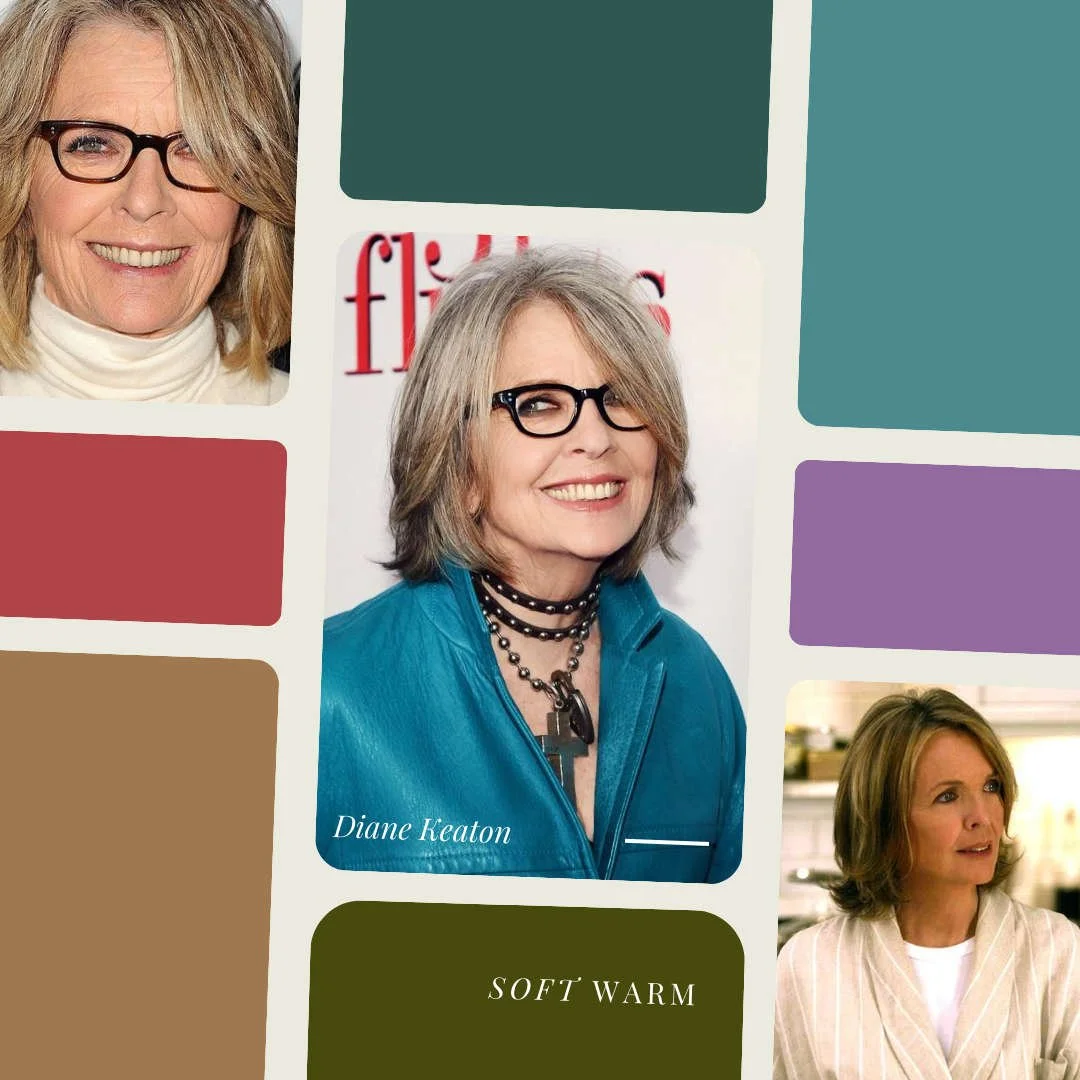
Some of the most flattering Soft Autumn colours include:
sage green, olive, eucalyptus, muted teal, camel, mushroom, cinnamon, warm taupe, dusty terracotta, muted peach, soft coral, mocha, warm cocoa, moss green.
These colours harmonise with the natural softness and warmth in the palette.
Worst Colours for Soft Autumns
Soft Autumns are often overwhelmed by:
neon colours, icy pastels, optic white, jet black, electric blue, hot pink, cool magenta.
These colours compete with the natural softness of the face instead of supporting it.

Can You Be Neutral Between Soft Autumn and Soft Summer?
Yes — absolutely.
Some people struggle to determine if they’re a Soft Autumn or Soft Summer because their undertone is so close to the neutral boundary between the two seasons. You might feel like you don’t have an undertone, but also consider whether your hair and eyes lean warm or cool, and even check your overtone (is your foundation warm-neutral or cool neutral?).
The most important thing is observing:
whether warmth or coolness creates more harmony,
whether earthy or cool-muted colours make your skin look healthier,
and whether gold or silver integrates more naturally.
Often the answer becomes obvious through side-by-side draping comparisons.
How a Professional Colour Analysis Can Help
A professional colour analysis helps remove the guesswork and confusion between similar muted seasons.
Through detailed colour analysis, you can discover: your most flattering colours, ideal wardrobe neutrals, best makeup tones, jewellery metals, hair colour direction and the exact level of warmth, coolness and softness that suits you best.
If you suspect you may be a Soft Autumn but aren’t completely sure, you can book a personalised Virtual Colour Analysis from anywhere in the world.
Or, if you’ve already been typed as a Soft Autumn, you can explore the Soft Autumn Colour Guide for:
wearable colour palettes,
makeup recommendations,
wardrobe guidance,
outfit inspiration,
jewellery advice,
and practical styling tools designed specifically for Soft Autumn colouring.